.avif)
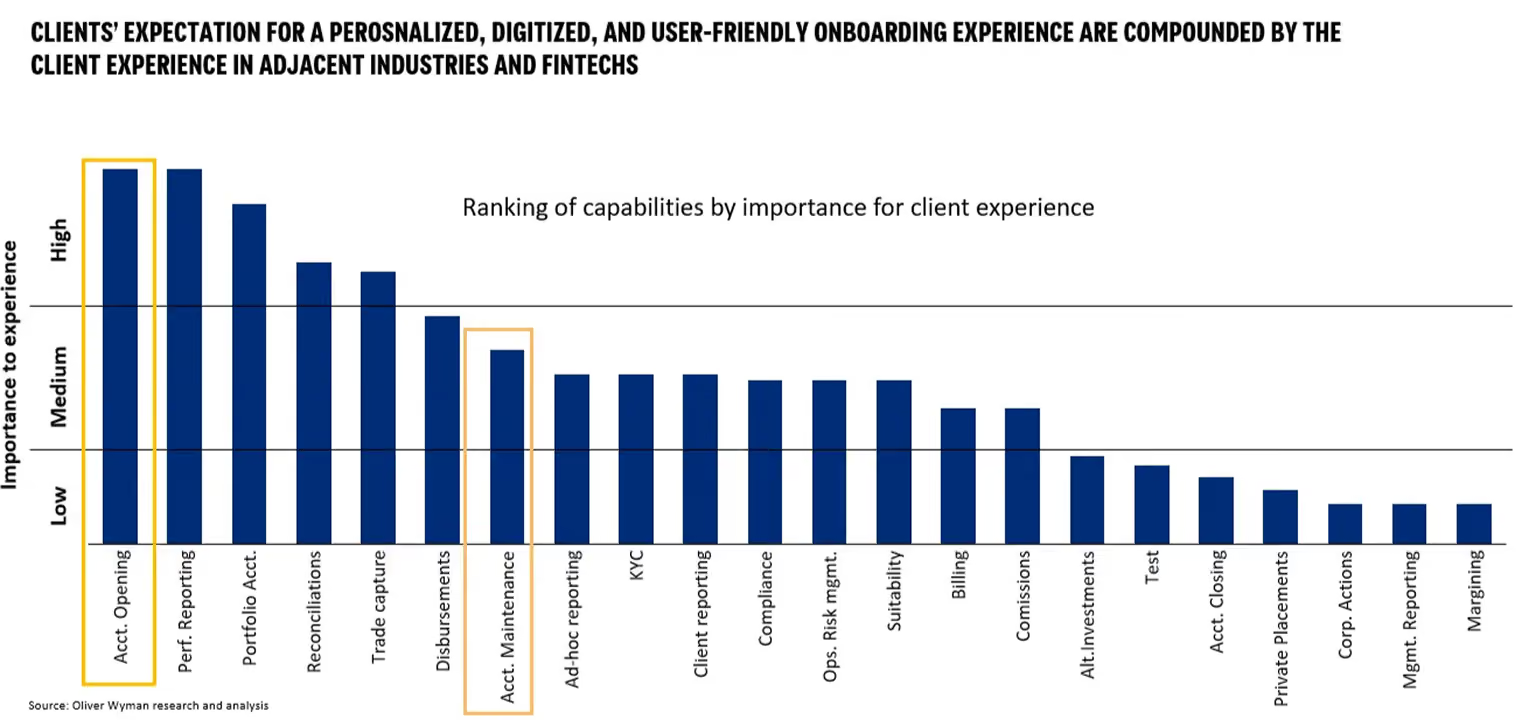
At Dispatch, we focus on a simple question: why does opening a custodian account still take so long?
The answer is the workflow. Account opening spans too many systems, so ops teams “swivel chair” to collect and re-enter data, manage signatures, log into portals, and manually track status. That fragmentation creates errors and rework, and the consequences are severe: slower time-to-revenue and a poor onboarding experience for clients.
This problem is widely recognized inside RIAs, and it's not just anecdotal — industry research consistently confirms that manual account opening is one of the biggest operational drains in wealth management. Until now, teams opening accounts at Schwab had two options: log into Schwab Advisor Center and key everything in by hand, or submit through DocuSign and wait through multi-day processing cycles.
We recently launched Early Access to Schwab account opening directly via API from inside Dispatch. The result: account opening that used to take days now completes in minutes from the moment you sign. We submit account applications programmatically, Schwab handles client signing, and we track status all the way through account opening. In this post, we'll walk through how it works — the workflow, how Dispatch routes between Schwab API and DocuSign, what's supported today, and what changes for ops teams.
TLDR
What’s New
- Direct account opening via new Schwab APIs for account types supported in Schwab Advisor Center’s digital workflow.
- Submitted —> Opened in minutes vs days: here are some preliminary results from our testing with Schwab (note, your results may vary):
- Accounts open as quickly as a few minutes vs. ~2 days via standard DocuSign SLAs.
- Account numbers available in as little as 1 hour after opening.
- Unified experience between Schwab API and DocuSign: Dispatch intelligently suggests the best execution path — Schwab API or DocuSign — based on account type and workflow requirements.
- Live status tracking: Track the full account opening lifecycle — from submission through open — directly in Dispatch, without relying on email check-ins (coming soon).
Current State
Why account opening workflows are still so painful
Account opening is hard before you even touch a form.
First, there's preparation: each custodian has its own requirements per account type, and those requirements change. Keeping up with those updates is expensive, and the constant change management across the organization causes confusion.
Once you know what data you need, sourcing it is its own challenge. Client data lives in your CRM or other systems, gaps require back-and-forth with clients, advisors and ops are coordinating in parallel, and firm-specific paperwork often needs to be layered on top of custodian forms.
Then there's execution. First, decide on a delivery channel — custodian digital workflows don't support every account type, so you may need to use DocuSign. Then manually populate all the data, review and send for signatures, wait for signatures (and follow up when they don't come), monitor submission status, and deal with whatever issues surface. Meanwhile, you're fielding status requests from clients, leadership, and your own team.
All of this happens under time pressure — M&A transitions, new client onboarding, steady-state requests — while teams are trying to move as fast as possible and keep the experience seamless for clients. After all that work just to get an account submitted, waiting days for it to be processed only adds to the burden.
What “Do you integrate with Schwab?” has meant historically
When firms ask "Do you integrate with Schwab?", they're usually expecting the answer to mean full API-driven account opening. In reality, until now, the most relevant integration Schwab offered was sending some client data into Schwab Advisor Center to seed the process. You still had to log in, select which accounts to open, fill in all the account information, and upload firm forms — all of that remained manual work inside the digital workflow. The result: ops teams were still spending significant time swivel chairing between Schwab Advisor Center and other screens to manually enter in data throughout the flow.
What’s new: a faster execution path for Schwab accounts
Dispatch already helps firms solve the hard preparation work — pulling data from your CRM, spreadsheets, and other sources, validating requirements, coordinating signatures, and handling firm forms. Now, we've added the fastest channel to deliver that data to Schwab: a direct API that opens accounts programmatically — no portal required. The moment you submit in Dispatch, Schwab immediately sends the signing request to your client. Track the full account opening lifecycle directly in Dispatch, and push status automatically to downstream systems like your CRM or data warehouse. Dispatch intelligently routes between Schwab API and DocuSign based on your firm's preferences and the accounts you're opening — so you always get the fastest path available, automatically.
How Does it Work?
The real work of this launch was integrating Schwab's new API as a native execution channel inside Dispatch — so your team gets the speed of direct API submission without changing how you work. Here's how the end-to-end workflow runs.
- Account selection: Identify which accounts need to be opened and for whom. This can be sourced from a CRM (e.g., an advisor logging instructions on a Case), a spreadsheet (common in bulk onboarding or M&A transitions), or entered directly in Dispatch.
- Data intake and population: Once accounts are selected, Dispatch pulls in any relevant data from across your tech stack, applies firm defaults (e.g., communication preferences or affiliation) and preferences (e.g., personalized lists of master account numbers), and fills in what it can automatically.
- Pre-submit validation: Before we submit, we validate required fields and formatting to catch defects that would otherwise become NIGOs. Schwab has publicly shared that digital onboarding can reduce NIGO rates dramatically — the driver isn't paper vs. digital format, it's whether data is manually typed or programmatically validated before submission. Dispatch programmatically validates and populates data regardless of delivery channel — whether that's the Schwab API, DocuSign, or a wet signature workflow. Schwab has also shared that digitizing high-volume operational workflows can materially reduce NIGO in adjacent processes, reinforcing that validation and structured submission are the real drivers.
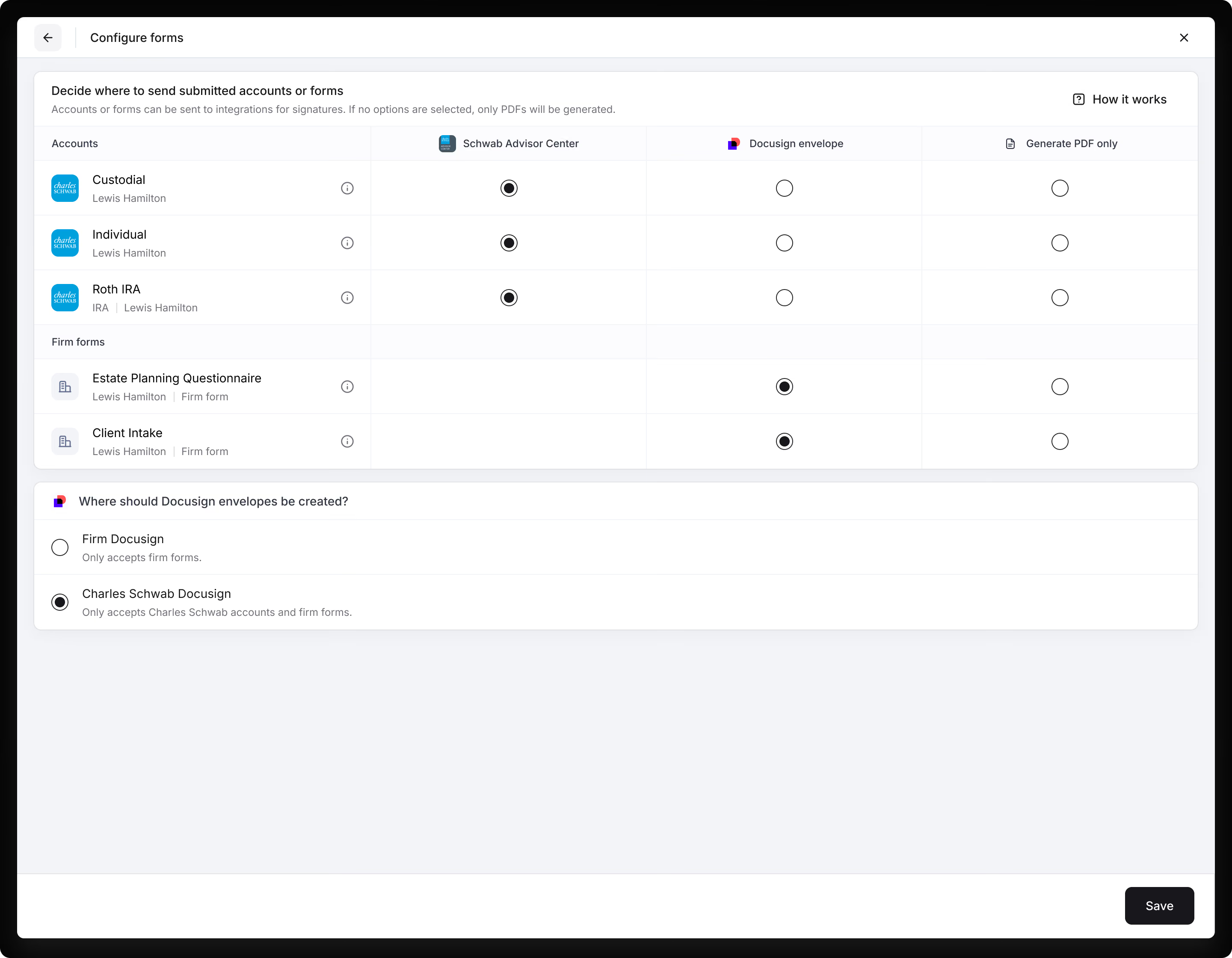
- Routing engine: Dispatch lets you configure which submission channel to use per account type. Not all accounts are eligible for the API, and some workflows — particularly those with firm forms — may be better consolidated into DocuSign for a single client signature. For other cases, you may want to push API-eligible accounts through immediately to open them as fast as possible, while DocuSign handles the rest in parallel. Firms can set defaults to minimize clicks, and users can override per submission. Either way, the experience is the same in Dispatch.
- Execution and client signing: For API-supported accounts, we submit programmatically and Schwab sends the client an email to complete signing. If firm forms are included, they follow the same attestation process as forms submitted through Schwab's digital workflow. Accounts routed through DocuSign work exactly as they do today.
- Status tracking: For the first time, you can track the full account opening lifecycle natively in Dispatch — covering everything from submission to Schwab through account opened. No more checking Schwab’s website or chasing status over email. View it directly in Dispatch, export it, or sync it to third-party tools like your CRM or data warehouse.
Getting started
If you custody at Schwab and want to enable API account opening in Dispatch:
- Book a demo: https://dispatch.io/contact
- Existing customer? Contact your Dispatch Client Service Manager to enable Schwab API execution
- Supported registrations and routing behavior: see the Operator FAQ below
Shoutout to our incredible team who made this happen: Jason Mills, Edward Baeg, Erika Leon, Collin Boyer, Peter Chapman, and Adam Benvie.